Kérdőjel ?
Szimbólum jelentése
The question mark is put at the end of the sentence to show the corresponding intonation. Ancient writers used it; However, the outline was different. In the Syrian texts, it looked like a colon and was placed at the beginning of a sentence, if it did not start with a question word. And in the Greek, it looked, approximately, as a point with a lightning gushing from right to left (·∼). The modern look, found in print from the 16th century, however, did not always express the question but was acknowledged in the 18th century. In the Spanish letter, the symbol of an ¿ is added at the beginning of the sentence. It is convenient to know in advance what intonation should be used.
The image of the question mark is associated with the Latin word „quaestio” — which means a search for an answer. Over time, for shortness, they simply began to write q over o. Then the mark mutated into what we see today.
Sometimes a question mark is used with an exclamation mark. According to the rules of Russian punctuation, it should be used as
⁈
, but not like that
 .
.
In Unicode, there are still ⸮ and ⁇ .
Other symbols are used to indicate interrogative intonation:
; Greek.
¿ Optional Spanish. It is placed at the beginning of sentences.
؟ Arab.
՞ Artsakan nshan. Armenian.
܆ Old Syrian. It was used at the beginning of the sentence if it did not start with a question word.
፧ Ethiopian.
꘏ Wai.
꛷ Bamum.
𑅃 Chakma.
꫱ Manipuri.
᥅ Limbu.
A(z) „Kérdőjel” szimbólum a(z) „ASCII írásjelek” alblokkban található a(z) „Latin (alap)” blokkon belül, és a 1.1 Unicode verzió részeként lett jóváhagyva 1993-ben.
Válasszon egy emoji-képstílust, és nyissa meg teljes méretben. Minden kép letölthető, és felhasználható a terveiben és prezentációiban.

🛈 Az emoji-képek a megfelelő jogtulajdonosok tulajdonai. Csak előnézetre szolgálnak. Kérjük, mindig tartsa be az egyes készítők licencfeltételeit.
🛈 Nyílt licencű képek. Ingyenesen letölthetők és felhasználhatók a {{licence}} licenc feltételei szerint. Előfordulhat, hogy fel kell tüntetni a szerzőt.
| Unicode-név | Question Mark |
| Unicode-szám | |
| HTML-entitás | ? |
| Sík | 0: Alap többnyelvű lap |
| Unicode blokk | Latin (alap) |
| Unicode-alblokk | ASCII írásjelek |
| Unicode-verzió | 1.1 (1993) |
| Alt-kód |
| Párosított tükörtartó típusa (bidi) | None |
| Összetételi kizárás | No |
| Ügyváltás | 003F |
| Egyszerű esetcsere | 003F |
| Grapheme_Base | + |
| scripts | Common |
| Terminal_Punctuation | + |
| Sentence_Terminal | + |
| Pattern_Syntax | + |
| Kódolás | hex | dec (bytes) | dec | binary |
|---|---|---|---|---|
| UTF-8 | 3F | 63 | 63 | 00111111 |
| UTF-16BE | 00 3F | 0 63 | 63 | 00000000 00111111 |
| UTF-16LE | 3F 00 | 63 0 | 16128 | 00111111 00000000 |
| UTF-32BE | 00 00 00 3F | 0 0 0 63 | 63 | 00000000 00000000 00000000 00111111 |
| UTF-32LE | 3F 00 00 00 | 63 0 0 0 | 1056964608 | 00111111 00000000 00000000 00000000 |
Másold és illeszd be ezeket a kódokat, hogy a Kérdőjel karaktert használd weboldalak, közösségi média, üzenetküldők vagy blogbejegyzések szövegeiben.
| HTML | |
| CSS | |
| JavaScript, JSON | |
| Unix, C, PHP, JAVA | |
| Ruby, PHP | |
| Perl | |
| URL-encode |
-
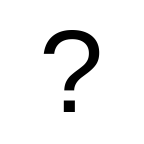 Arimo
Arimo -
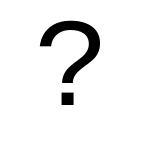 Cousine
 -
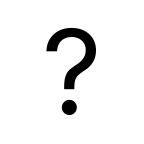 Inter
Inter -
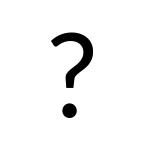 Lato
Lato -
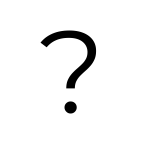 Montserrat
 -
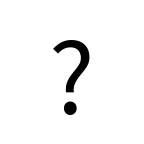 Noto Sans Jp
 -
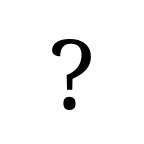 Noto Serif
 -
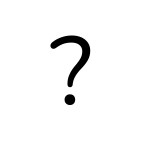 Nunito
 -
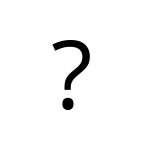 Open Sans
 -
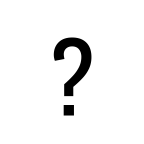 Oswald
 -
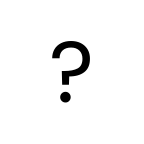 Poppins
 -
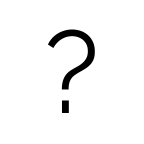 Raleway
 -
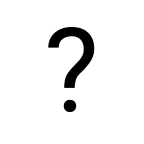 Roboto
 -
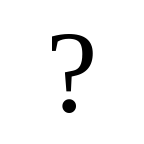 Tinos
Tinos
