Semnul întrebării ?
Semnificația simbolului
The question mark is put at the end of the sentence to show the corresponding intonation. Ancient writers used it; However, the outline was different. In the Syrian texts, it looked like a colon and was placed at the beginning of a sentence, if it did not start with a question word. And in the Greek, it looked, approximately, as a point with a lightning gushing from right to left (·∼). The modern look, found in print from the 16th century, however, did not always express the question but was acknowledged in the 18th century. In the Spanish letter, the symbol of an ¿ is added at the beginning of the sentence. It is convenient to know in advance what intonation should be used.
The image of the question mark is associated with the Latin word „quaestio” — which means a search for an answer. Over time, for shortness, they simply began to write q over o. Then the mark mutated into what we see today.
Sometimes a question mark is used with an exclamation mark. According to the rules of Russian punctuation, it should be used as
⁈
, but not like that
 .
.
In Unicode, there are still ⸮ and ⁇ .
Other symbols are used to indicate interrogative intonation:
; Greek.
¿ Optional Spanish. It is placed at the beginning of sentences.
؟ Arab.
՞ Artsakan nshan. Armenian.
܆ Old Syrian. It was used at the beginning of the sentence if it did not start with a question word.
፧ Ethiopian.
꘏ Wai.
꛷ Bamum.
𑅃 Chakma.
꫱ Manipuri.
᥅ Limbu.
Simbolul „Semnul întrebării” este inclus în subblocul „Punctuație ASCII” al blocului „Basic Latin” și a fost aprobat ca parte a versiunii Unicode 1.1 în anul 1993.
Alege un stil de imagine pentru emoji și deschide-l la rezoluție mare. Toate imaginile pot fi descărcate și utilizate în designuri și prezentări.

🛈 Imaginile emoji sunt proprietatea deținătorilor de drepturi. Doar pentru previzualizare. Respectă întotdeauna termenii de licență ai fiecărui furnizor.
🛈 Imagini cu licență deschisă. Descărcare și utilizare gratuite, în conformitate cu termenii {{licence}}. Poate fi necesară menționarea autorului.
| Nume Unicode | Question Mark |
| Număr Unicode | |
| Entitate HTML | ? |
| Plan | 0: Principalul plan multilingv |
| Bloc Unicode | Basic Latin |
| Subbloc Unicode | Punctuație ASCII |
| Versiunea Unicode | 1.1 (1993) |
| Cod Alt |
| Tip de suport oglindă pereche (bidi) | None |
| Excluderea compoziției | No |
| Schimbarea cazului | 003F |
| Simplă schimbare de caz | 003F |
| Grapheme_Base | + |
| scripts | Common |
| Terminal_Punctuation | + |
| Sentence_Terminal | + |
| Pattern_Syntax | + |
| Codificare | hex | dec (bytes) | dec | binary |
|---|---|---|---|---|
| UTF-8 | 3F | 63 | 63 | 00111111 |
| UTF-16BE | 00 3F | 0 63 | 63 | 00000000 00111111 |
| UTF-16LE | 3F 00 | 63 0 | 16128 | 00111111 00000000 |
| UTF-32BE | 00 00 00 3F | 0 0 0 63 | 63 | 00000000 00000000 00000000 00111111 |
| UTF-32LE | 3F 00 00 00 | 63 0 0 0 | 1056964608 | 00111111 00000000 00000000 00000000 |
Copiază și lipește aceste coduri pentru a folosi personajul Semnul întrebării în textele pentru site-uri web, rețele sociale, mesagerie sau postări pe blog.
| HTML | |
| CSS | |
| JavaScript, JSON | |
| Unix, C, PHP, JAVA | |
| Ruby, PHP | |
| Perl | |
| URL-encode |
-
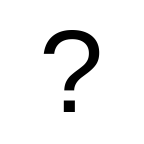 Arimo
Arimo -
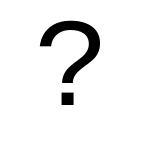 Cousine
 -
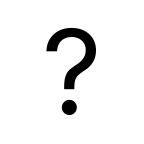 Inter
Inter -
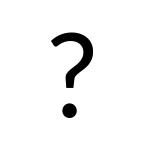 Lato
Lato -
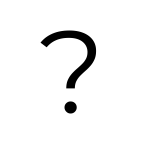 Montserrat
 -
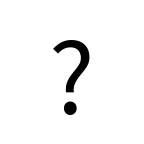 Noto Sans Jp
 -
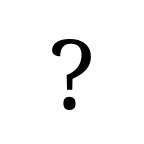 Noto Serif
 -
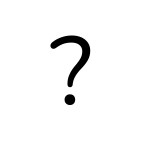 Nunito
 -
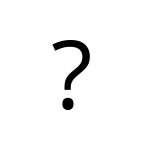 Open Sans
 -
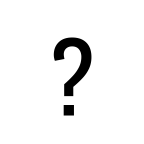 Oswald
 -
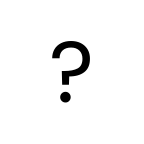 Poppins
 -
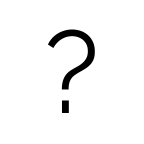 Raleway
 -
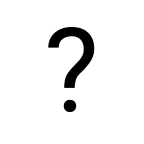 Roboto
 -
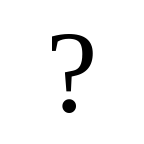 Tinos
Tinos
