
ปรัศนี, เครื่องหมายคำถาม ?
ความหมายของสัญลักษณ์
The question mark is put at the end of the sentence to show the corresponding intonation. Ancient writers used it; However, the outline was different. In the Syrian texts, it looked like a colon and was placed at the beginning of a sentence, if it did not start with a question word. And in the Greek, it looked, approximately, as a point with a lightning gushing from right to left (·∼). The modern look, found in print from the 16th century, however, did not always express the question but was acknowledged in the 18th century. In the Spanish letter, the symbol of an ¿ is added at the beginning of the sentence. It is convenient to know in advance what intonation should be used.
The image of the question mark is associated with the Latin word «quaestio» — which means a search for an answer. Over time, for shortness, they simply began to write q over o. Then the mark mutated into what we see today.
Sometimes a question mark is used with an exclamation mark. According to the rules of Russian punctuation, it should be used as
⁈
, but not like that
 .
.
In Unicode, there are still ⸮ and ⁇ .
Other symbols are used to indicate interrogative intonation:
; Greek.
¿ Optional Spanish. It is placed at the beginning of sentences.
؟ Arab.
՞ Artsakan nshan. Armenian.
܆ Old Syrian. It was used at the beginning of the sentence if it did not start with a question word.
፧ Ethiopian.
꘏ Wai.
꛷ Bamum.
𑅃 Chakma.
꫱ Manipuri.
᥅ Limbu.
ข้อความ «ปรัศนี, เครื่องหมายคำถาม» ถูกรวมอยู่ในหมวดย่อย «เครื่องหมายวรรคตอน ASCII» ของหมวด «อักษรละตินพื้นฐาน» และได้รับการอนุมัติเป็นส่วนหนึ่งของ Unicode เวอร์ชัน 1.1 ในปี 1993.
เลือกรูปแบบรูปภาพอีโมจิแล้วเปิดแบบขนาดเต็ม รูปภาพทั้งหมดสามารถดาวน์โหลดและใช้ในงานออกแบบหรือพรีเซนเทชันของคุณได้

🛈 รูปภาพอีโมจิเป็นทรัพย์สินของเจ้าของลิขสิทธิ์แต่ละราย แสดงเพื่อการดูตัวอย่างเท่านั้น โปรดปฏิบัติตามเงื่อนไขสัญญาอนุญาตของผู้ให้บริการแต่ละราย
🛈 รูปภาพที่มีสัญญาอนุญาตแบบเปิด ดาวน์โหลดและใช้งานได้ฟรีตามเงื่อนไขของ {{licence}} อาจต้องระบุแหล่งที่มา
| ชื่อ Unicode | Question Mark |
| หมายเลข Unicode | |
| เอนทิตี HTML | ? |
| ระนาบ | 0:เครื่องบินหลายภาษาหลัก |
| บล็อก Unicode | อักษรละตินพื้นฐาน |
| บล็อกย่อย Unicode | เครื่องหมายวรรคตอน ASCII |
| เวอร์ชัน Unicode | 1.1 (1993) |
| รหัส Alt |
| ประเภทขายึดกระจกแบบคู่ (bidi) | None |
| การยกเว้นองค์ประกอบ | No |
| กรณีเปลี่ยน | 003F |
| เปลี่ยนเคสง่ายๆ | 003F |
| Grapheme_Base | + |
| scripts | Common |
| Terminal_Punctuation | + |
| Sentence_Terminal | + |
| Pattern_Syntax | + |
| การเข้ารหัส | hex | dec (bytes) | dec | binary |
|---|---|---|---|---|
| UTF-8 | 3F | 63 | 63 | 00111111 |
| UTF-16BE | 00 3F | 0 63 | 63 | 00000000 00111111 |
| UTF-16LE | 3F 00 | 63 0 | 16128 | 00111111 00000000 |
| UTF-32BE | 00 00 00 3F | 0 0 0 63 | 63 | 00000000 00000000 00000000 00111111 |
| UTF-32LE | 3F 00 00 00 | 63 0 0 0 | 1056964608 | 00111111 00000000 00000000 00000000 |
คัดลอกและวางรหัสเหล่านี้เพื่อใช้ตัวละคร ปรัศนี, เครื่องหมายคำถาม ในข้อความสำหรับเว็บไซต์ โซเชียลมีเดีย แอปส่งข้อความ หรือโพสต์บล็อก
| HTML | |
| CSS | |
| JavaScript, JSON | |
| Unix, C, PHP, JAVA | |
| Ruby, PHP | |
| Perl | |
| URL-encode |
-
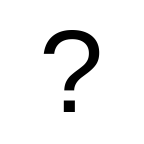 Arimo
Arimo -
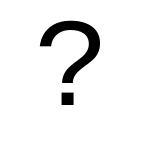 Cousine
 -
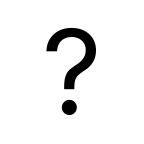 Inter
Inter -
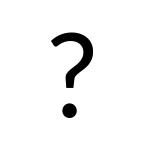 Lato
Lato -
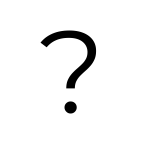 Montserrat
 -
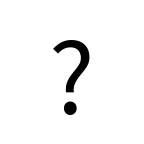 Noto Sans Jp
 -
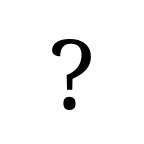 Noto Serif
 -
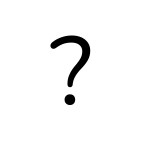 Nunito
 -
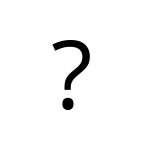 Open Sans
 -
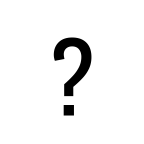 Oswald
 -
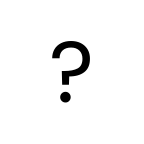 Poppins
 -
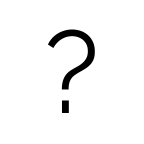 Raleway
 -
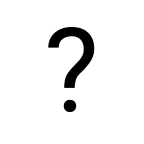 Roboto
 -
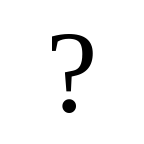 Tinos
Tinos
