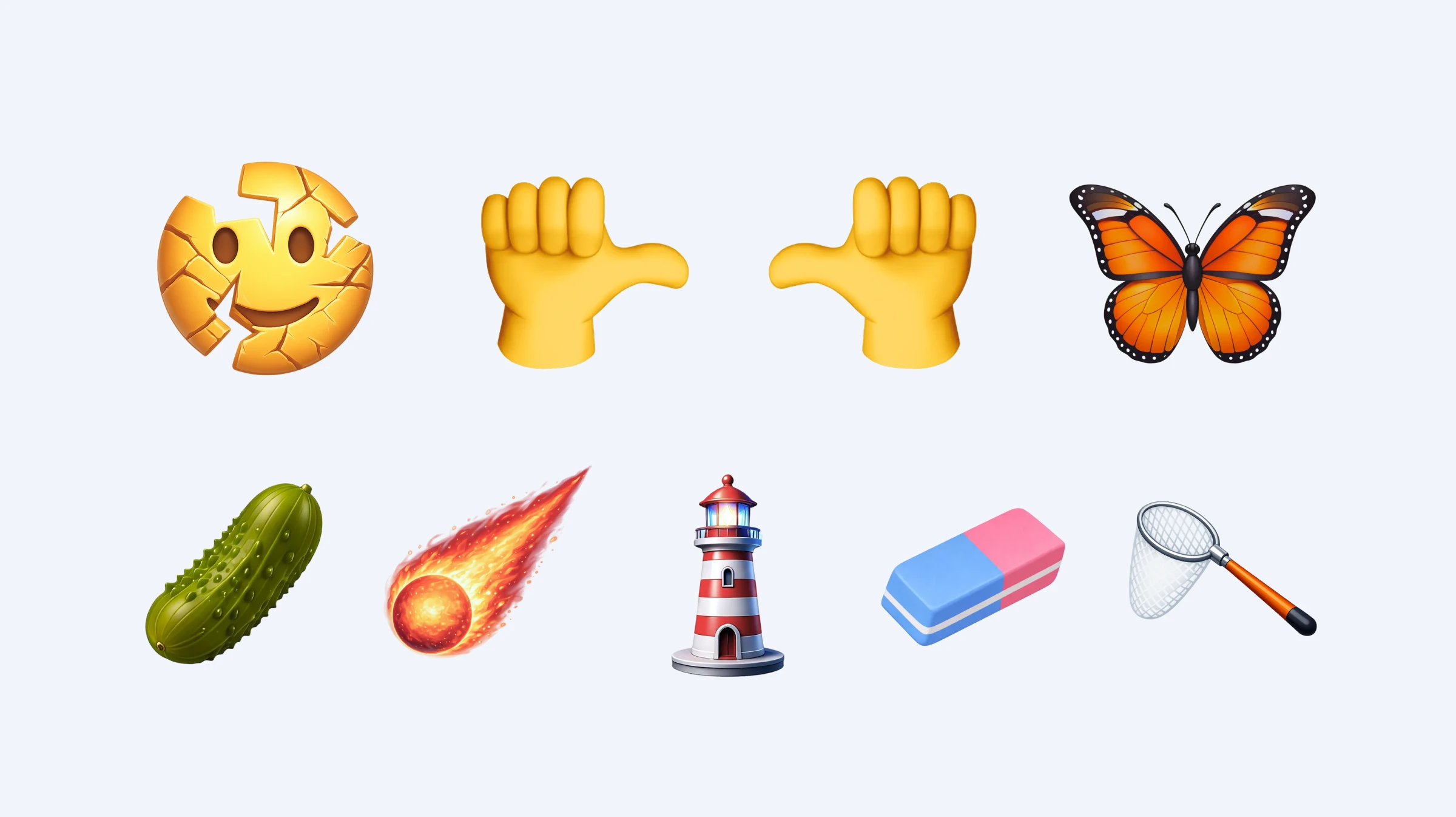

On September 9, 2025, the Unicode Consortium officially released version 17.0 of the standard. It now holds 159,801 characters, with 4,803 brand-new ones. Among them: seven fresh emojis, four writing systems, plus a bunch of tweaks to existing symbols — from display fixes to simpler encodings and other technical details. Let’s dive in and see what the Consortium brought us this time.
New Emojis in Unicode 17.0
Unless you’re the kind of Unicode superfan who loves getting into the weeds of encodings, you’re probably here for the emojis. For most people, their release is as hyped as a new season of a favorite show.
This year, we’re getting seven new emojis. Some of them feel a little… questionable, but maybe we just haven’t figured out how to use them yet. Let’s sort them out together.
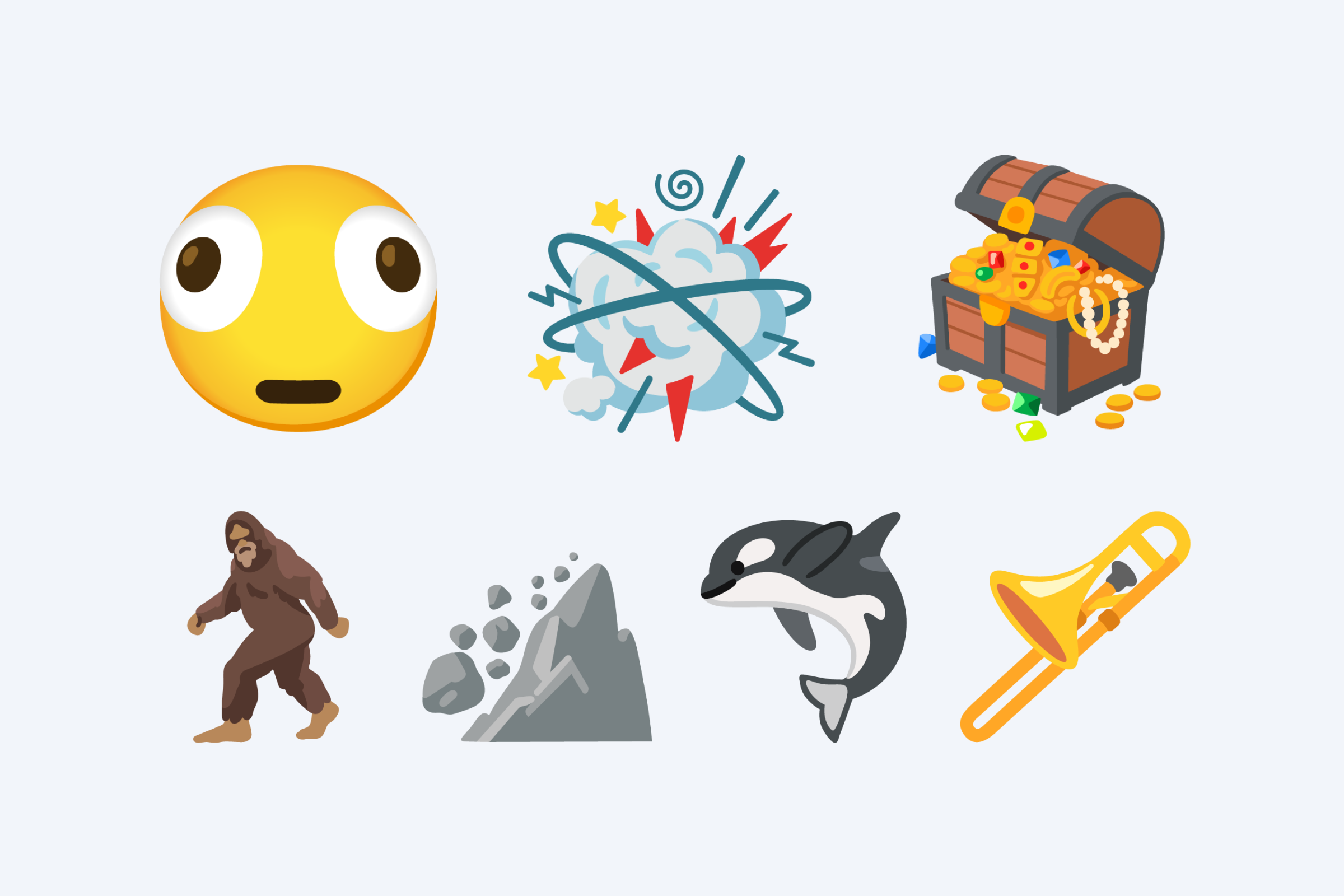
- Distorted Face.
 Finally, the official emoji for “morning without coffee.” Perfect for those chats where you’d rather not type out that you’re sleep-deprived and best left alone. Expect to see this one everywhere in work chats.
- Fight Cloud.
 You know those cartoon dust clouds with fists and legs sticking out? Now you can drop one straight into a thread when the argument has spiraled out of control and the battle of armchair critics can’t be stopped. Just sit back and watch — unless you want to end up in the dust cloud yourself.
- Orca.
 Marine biologists are happy; the rest of us get another ocean creature emoji. What emotion exactly are you sending with an orca? Hard to say. Orcas are social animals with their own language — maybe we should ask them directly.
- Hairy Creature.
 The mythical ranks get a new member: a slouched half-human with a slightly spooked expression, looking like Bigfoot’s distant cousin. Honestly, he could also pass for a student who’s pulled too many all-nighters, lived at his computer, and forgot to get a haircut. The perfect symbol of exhaustion and mild chaos.
- Trombone.
 Music emojis get a boost too. This one’s tailor-made for that sad “wah-wah-waaaah” sound from comedy skits. A classy way to say someone’s line landed just as awkwardly as that noise. And yes, they’ll definitely get the hint.
- Landslide.
 For when everything goes downhill — literally. Now you can illustrate dropping grades, sinking moods, or currency rates in freefall. Works especially well in political debates, where things usually collapse faster than you can refresh the feed.
- Treasure Chest.
 A pirate’s dream, and the perfect symbol for “looked for copper, found gold.” Great for jokes about lucky finds — from lottery wins to discovering a forgotten $10 bill in your jacket pocket.
Besides these seven, Unicode 17.0 also adds variations of existing emojis. There’s now a gender-neutral ballet dancer with skin tone options, plus new colors for compound emojis like
 people with bunny ears and
 people wrestling. Maybe not as flashy as a treasure chest, but still some nice room for creativity.
Where Did the Apple Core Go?
Unicode 17.0 was also supposed to include the Apple Core emoji, which we wrote about in our previous article. But it didn’t make the final cut. That happens: new emojis first go through a proposal stage where authors argue for their inclusion. Then the committee decides which ones make it into the release. The apple core was shortlisted — but dropped before the finish line.
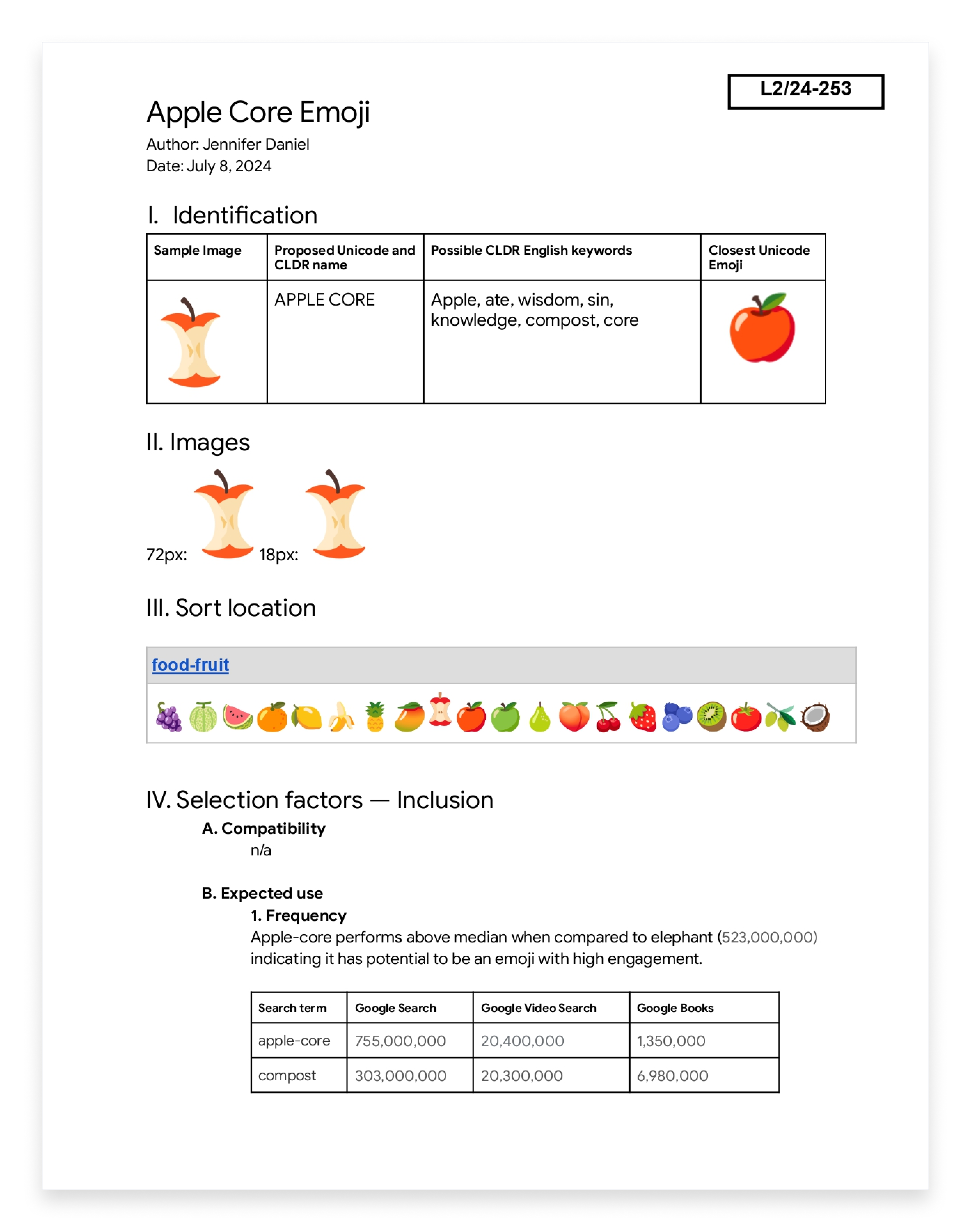
It’s a shame — it could have been the perfect symbol for Android fans, who sometimes call Apple “the bitten apple.” That emoji would’ve fit perfectly into their arsenal for arguments. But since the apple core didn’t make the cut, the endless Android vs. iOS battles will have to use the fight cloud and the trombone instead. A pretty solid replacement.
New Scripts
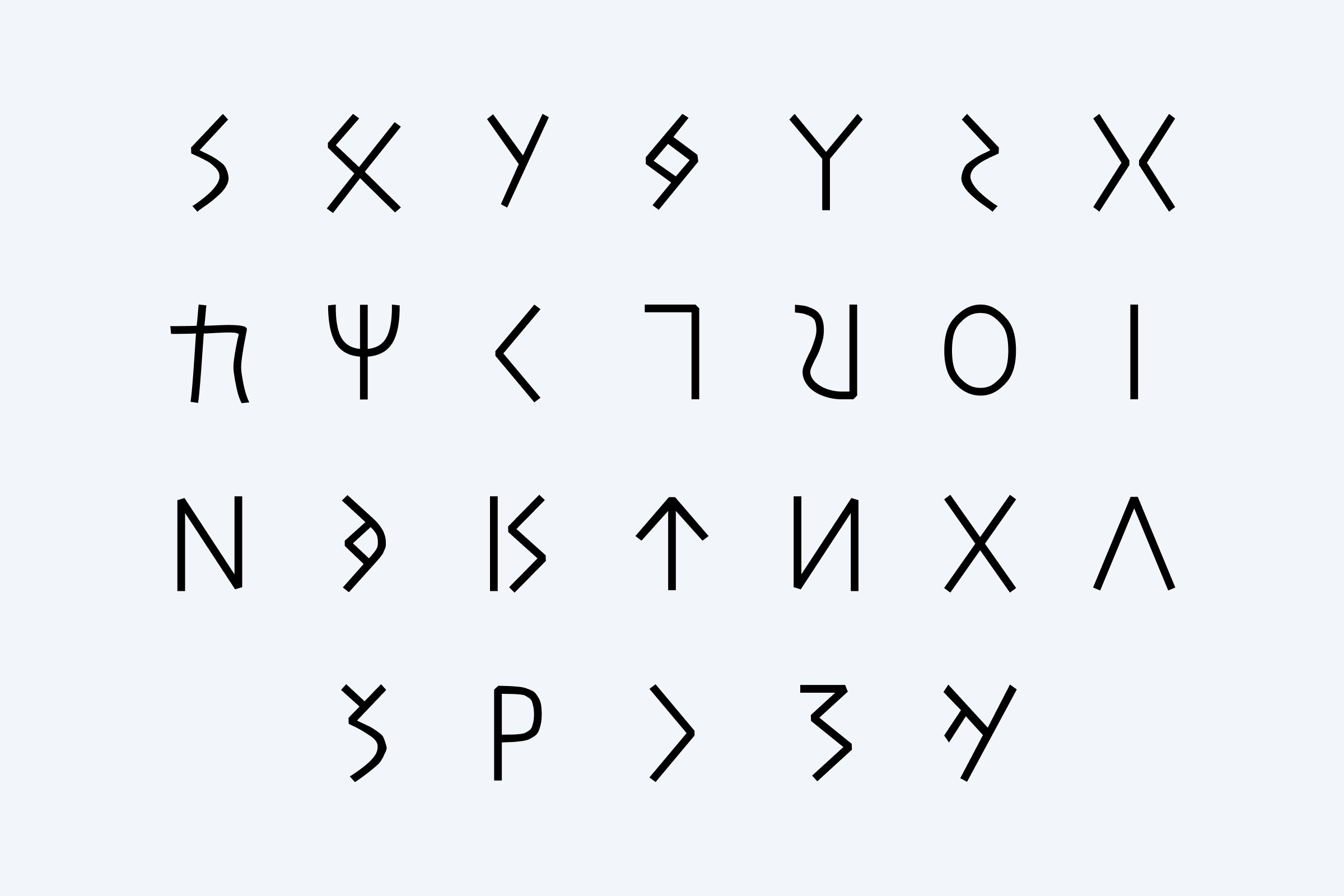
This year’s release also brings four new scripts. It’s unlikely that any of our readers are native users, but linguists will definitely celebrate. For researchers of rare and ancient languages, this isn’t just academic — it’s practical. They can now publish books, make teaching materials, compile dictionaries, and work with texts digitally.
When a script enters Unicode, it officially becomes part of the digital world and won’t vanish from sight for future generations. Even more, it helps preserve cultural heritage and gives smaller languages a chance to be heard online alongside global ones.
Here are the scripts that made their way into Unicode 17.0:
- Sidetic 10940–1095F An ancient script used around the 5th–3rd centuries BCE in southern Turkey. Only inscriptions on coins and stone slabs survive, and they’re still not fully deciphered. Now, anyone can try their hand at decoding ancient languages.
- Tolong Siki 11DB0–11DEF A modern script created in the late 20th century by medical doctor Narayan Oraon and linguist Francis Ekka for the Kurukh language, spoken in eastern and central India and in parts of Nepal. The alphabet was completed in 1999 and officially recognized by the Indian state of Jharkhand in 2007. Since then, books and magazines have been published in it, and schools have used it as the teaching language. The Kurukh people can now not only read schoolbooks but also chat online in their own script!
- Beria Erfe 16EA0–16EDF A script for the Zaghawa language spoken in Chad and Sudan. The first version of the alphabet was proposed in the 1950s by teacher Adam Tajir, who used designs from livestock branding marks as the basis for its letters. Another small community now has the chance to read and write in their native language digitally — and the rest of us get some interesting new characters in Unicode.
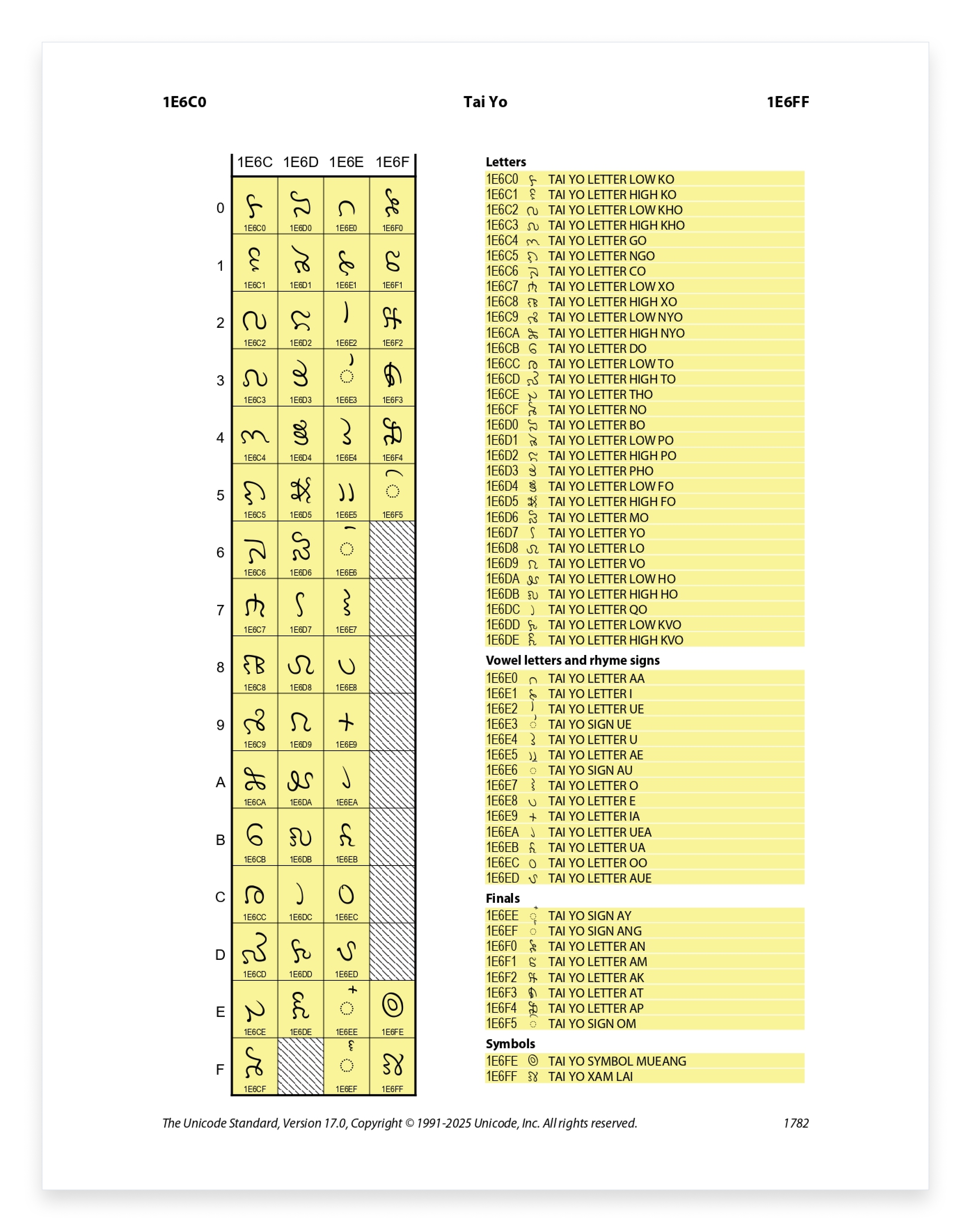
- Tai Yo 1E6C0–1E6FF A script used from the 16th to 19th centuries in Laos, Vietnam, and northeast Thailand. Later, it was pushed aside by more common alphabets and nearly disappeared. Thanks to Unicode, it’s getting a second life.
When Will You Get Them?
New emojis will start showing up on platforms and services toward the end of 2025, with mass adoption expected in 2026. Their final look will depend on the platform: the same symbol may appear differently on Apple, Google, Samsung, or Microsoft devices. To check how emojis render across different platforms, visit the page where we’ve collected emojis from different platforms.
Google’s Noto Color Emoji and Noto Emoji fonts already partially support Emoji 17.0. Apple, Samsung, WhatsApp, and Google plan to roll out the full set in the first quarter of 2026, while Microsoft will add it to Windows 11 in the summer or fall of that year.
So you’ll have to wait a bit: for now, when your friend sends you an orca, it might just show up as a sad little square. But don’t worry — in the end, nobody will be left without the new emojis.
Wrapping Up
Unicode 17.0 is a mix of serious technical improvements, new writing systems, and emojis ready to slip into your chats. The choice of new symbols may look debatable, but who are we to argue with the Consortium?
Let us remind you that together with Unicode 16.0 last year, the following were added: Face with Bags Under Eyes, Fingerprint, Splatter, Root Vegetable, Leafless Tree, Harp, Shovel, and Flag: Sark.